Artificial intelligence: why soft skills have never been more valuable?
Leadership, creativity, empathy, adaptability... As artificial intelligence continues to profoundly transform the world of work, human qualities have never been more valuable. But which human skills will make a difference in the job market? And how can these skills be developed from higher education onwards? A closer look at the human skills that will shape tomorrows leaders.
The Job Market in the Face of the Rise of Artificial Intelligence
According to a study conducted by McKinsey, by 2025, 88% of organizations were regularly using artificial intelligence in at least one of their business functions, up from 78% the previous year. Task automation, decision-support systems, data analysis, content creation... Artificial intelligence is now permeating every profession and transforming professional practices at an unprecedented pace.
According to the World Economic Forums 2025 Future of Jobs Report, 170 million new jobs are expected to be created by 2030, while 92 million jobs are projected to disappear, resulting in a net gain of 78 million jobs. During the same period, 39% of existing professional skills are expected to evolve or become obsolete. Practical expertise is becoming increasingly valuable, but employers surveyed also emphasize essential soft skills such as analytical thinking, resilience, agility, leadership, and creative thinking.
Because no matter how efficient artificial intelligence becomes, it cannot replace human judgment, the ability to listen, empathy, or the capacity to build trusting relationships and inspire a team.
Leadership, critical thinking, adaptability... These are the personal skills that will make all the difference in tomorrows workplace.
To better understand the essential human qualities required of future leaders, EHL Hospitality Business School, an internationally recognized Swiss institution, published the "Hospitality Leadership Competencies" report. The report is the result of decades of research and contributions from 22 experts in the hospitality industry.
The study identifies 30 leadership competencies divided into four main categories:
Self-management (self-leadership): This encompasses self-awareness, emotional management, accountability, resilience, and the ability to learn and adapt. These qualities enable individuals to navigate uncertainty more effectively, take a step back, and manage complex situations.
Human relations: These are based particularly on emotional intelligence, active listening, empathy, communication, respect for others, and the ability to build trust-based relationships. They are essential qualities for fostering collaboration, managing disagreements, and bringing teams together around shared goals.
Managerial and operational skills (hospitality): These include critical thinking, problem-solving, decision-making, crisis management, and talent development. These soft skills are essential for turning ideas into concrete actions, coordinating teams, and handling everyday challenges.
Skills for anticipating future challenges (future-ready skills): These include strategic thinking, creativity, innovation, the ability to identify emerging trends, and consideration of social and environmental issues. These skills enable professionals to anticipate transformations in their industries and envision new solutions.
The EHL report also emphasizes that these human qualities cannot function independently of one another. They are interconnected, complementary, and mutually reinforcing. According to the study, a leaders effectiveness depends on their ability to activate and integrate these different competencies according to the situation at hand.
For example, a leader facing a crisis must demonstrate resilience and sound judgment, while also knowing how to communicate with their teams, create an environment of trust, and make quick decisions.
Finally, the study highlights the central role of self-management, identified as the foundation of effective leadership. Before being able to guide others, a leader must understand themselves, manage their reactions, and take responsibility for their actions.
EHL Hospitality Business School: A True School of Life That Prioritizes Personal and Interpersonal Skills
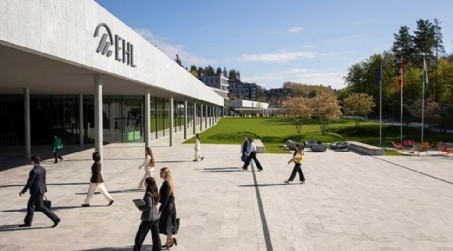
Founded in 1893 as the École hôtelière de Lausanne, EHL Hospitality Business School is the worlds oldest hospitality management school. In 2026, it ranked first in the world for Hospitality and Leisure Management in the QS World University Rankings for the eighth consecutive year.
With campuses in Switzerland (Lausanne and Passugg) and Singapore, the school offers outstanding academic programs in hospitality and business management.
Its mission is to educate people-centered leaders who can combine exceptional expertise with outstanding interpersonal skills, both in the hospitality industry and beyond, including luxury, finance, consulting, and real estate.
Learning Beyond the Classroom Through Experiential Education
Since its foundation more than 130 years ago, EHL has distinguished itself through its experiential learning approach and hands-on teaching methodology. Here, human skills are developed primarily through practical experience.
For example, the Bachelor of Science in International Hospitality Management program, taught in English or French at the Lausanne campus, offers an intensive semester combining practical courses and 25 workshops (cooking, catering, event planning, wine tasting, etc.); two six-month internships; and numerous group projects. Overall, approximately 50% of the curriculum takes place outside the classroom.
Students also have access to:
Approximately 30 student committees and associations covering various fields, including sports, arts, entrepreneurship, and sustainable development. These provide valuable opportunities to learn how to organize events, work as part of a team, and develop leadership skills.
Practical projects carried out in collaboration with companies, such as the Student Business Project, allow final-year undergraduate students to take on the role of real-world consultants. Working in teams of six, students help companies address real business challenges in areas such as marketing, strategy, and business development.
An ecosystem dedicated to entrepreneurship and innovation through the EHL Innovation Hub, where everyone can develop their ideas and receive guidance on advancing entrepreneurial projects.
This innovative teaching approach enables students to develop expertise across multiple disciplines, including management, marketing, and finance, while acquiring a wide range of transferable skills such as autonomy, creativity, entrepreneurship, accountability, adaptability, and interpersonal skills. From their very first year, they are also exposed to the demands and expectations of the professional world.
An International Environment That Encourages Open-Mindedness
With a strong global outlook, EHL Hospitality Business School stands out for its multicultural environment. Students from more than 125 different nationalities interact on campus every day. Undergraduate students can also undertake internships abroad and spend a semester at EHLs Singapore campus.
The academic year is also enriched by various international events, such as the Universal Festival, which invites young people from all backgrounds to share their cultures through food stalls, performances, and entertainment.
The Hospitality Mindset: A Passport to Standing Out in the Job Market
During their time at EHL, students develop a genuine "hospitality mindset" that places people at the center of everything.
Far from being exclusive to the hospitality industry, this approach brings together soft skills that are valuable across all professions and sectors: knowing how to listen to and understand the needs of others; demonstrating empathy and tact; building relationships based on trust; adapting to different people and situations; and handling sensitive situations with composure and diplomacy.
Students can also benefit from the following resources to refine their projects and facilitate their transition into the professional world:
A Career Center offering personalized coaching, workshops, and company visits;
A Career Fair held twice a year at the Lausanne campus, bringing together more than 500 recruiters and 1,500 students and alumni;
A network of 30,000 alumni across 150 countries and more than 12,000 partner companies.
With their comprehensive knowledge and skills, students are well-equipped to stand out in a rapidly evolving job market. 96% of EHL graduates find employment within six months of graduation in sectors such as hospitality, finance, consulting, real estate, events, and luxury.